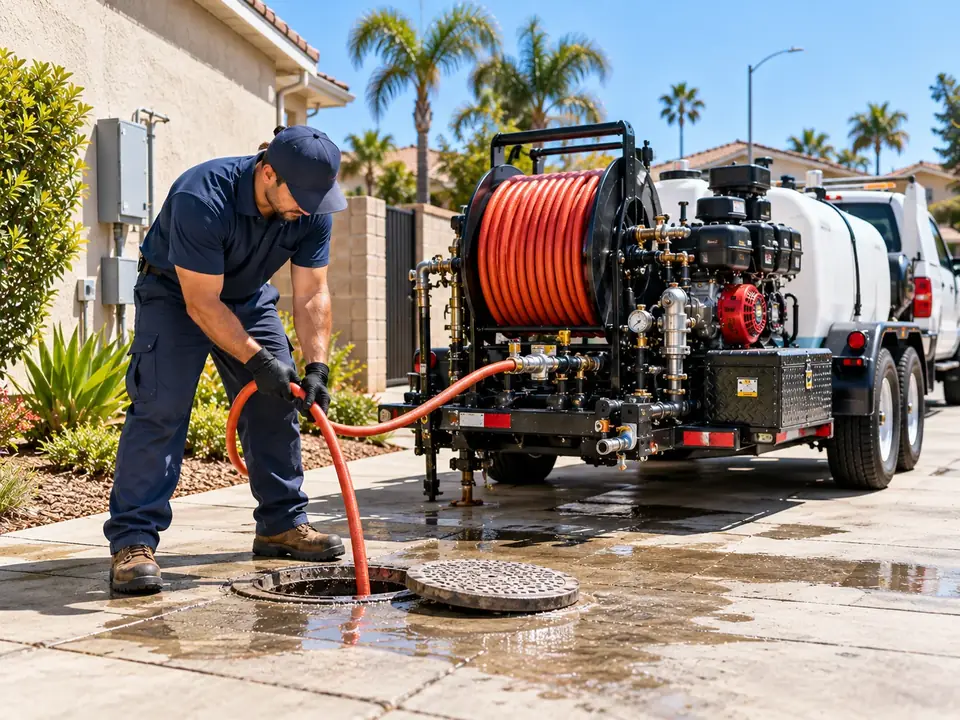
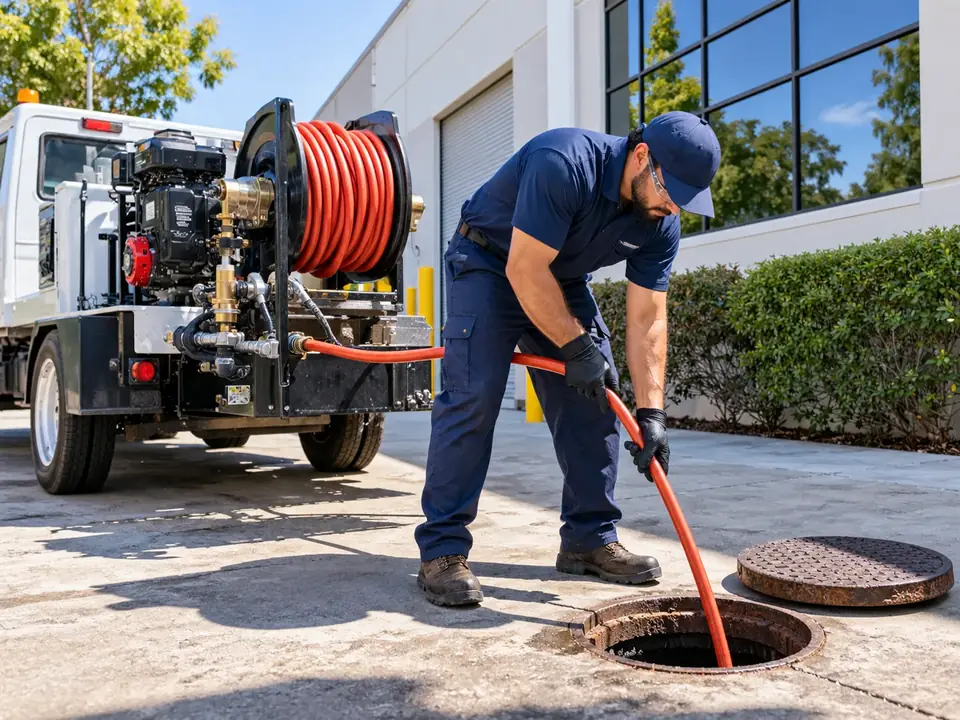
Why we focus on hydro jetting
Most drain calls in Whittier aren’t one-time accidents. They’re grease that has been building in a kitchen line for years, roots working into the joints of a 1950s clay lateral, or scale narrowing a cast-iron drain under a slab. A cable snake can open a path through those problems, but it can’t remove them. Hydro jetting can — when the pipe is in a condition to take it.
That second half matters. High-pressure water is a powerful tool, and in the wrong pipe it can turn a cleaning job into a repair. So our process starts with questions about the property, the symptoms and the history, and a camera check when the pipe’s condition is uncertain.
How we work
Diagnose before we clean
We want to know why a line is clogging, not just that it is. Patterns tell us a lot; a camera tells us the rest.
Match the method to the pipe
Clay, cast iron, Orangeburg and plastic each need a different approach — sometimes not jetting at all.
Explain the scope up front
You’ll know what’s being done, what’s included and what isn’t before work begins.
Tell you what cleaning can’t fix
Sags, breaks and offsets need repair. We say so plainly, so you don’t pay for the wrong fix twice.
Who we serve
Homeowners, landlords, property managers, restaurants and businesses across Whittier ZIP codes 90601–90606 — including Uptown, East Whittier, South Whittier, West Whittier, Whittwood, Michigan Park, The Quad, Friendly Hills and Valla.
Know Whittier’s pipes
Whittier was founded by Quakers in 1887 and grew up among citrus and walnut groves before the postwar boom filled the east and south with new neighborhoods. That history is written into the city’s plumbing: early clay laterals near Uptown, mid-century cast iron and clay across East and South Whittier, very hard groundwater, and mature trees on nearly every street. Our resource library explains what that means for your drains.
Call and tell us what’s going on. You’ll get a straight answer.