Why roots get into Whittier sewer lines
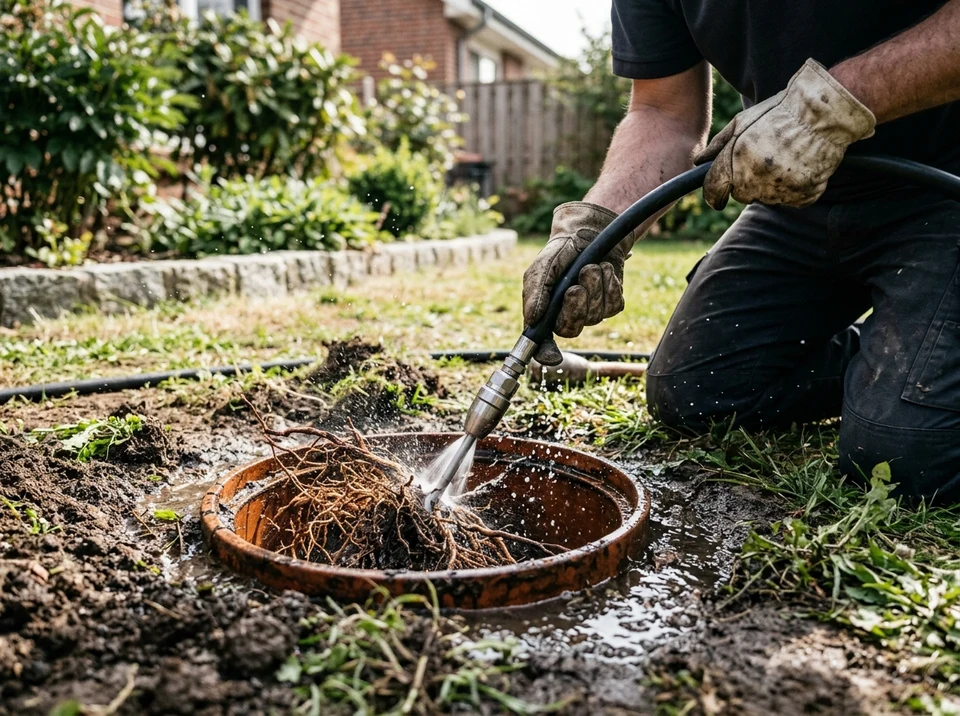
Roots don’t break into healthy pipe out of nowhere. They follow moisture and nutrients to a weak point — usually a joint in vitrified clay pipe, which was standard for sewer laterals in homes built before the 1970s. Each clay section is only a few feet long, so a 60-foot lateral can have well over a dozen joints. As the mortar or gaskets age, a hairline gap lets out a trace of warm, nutrient-rich water. A feeder root slips in, finds a steady supply, and grows into a dense mass.
Southern California’s dry summers make this worse: in a long dry season, a leaking sewer joint is one of the most reliable water sources a tree has. Mature ficus, sycamores, jacarandas, pines, and the citrus and avocado trees that remain from Whittier’s grove days are frequent culprits.
How roots are removed
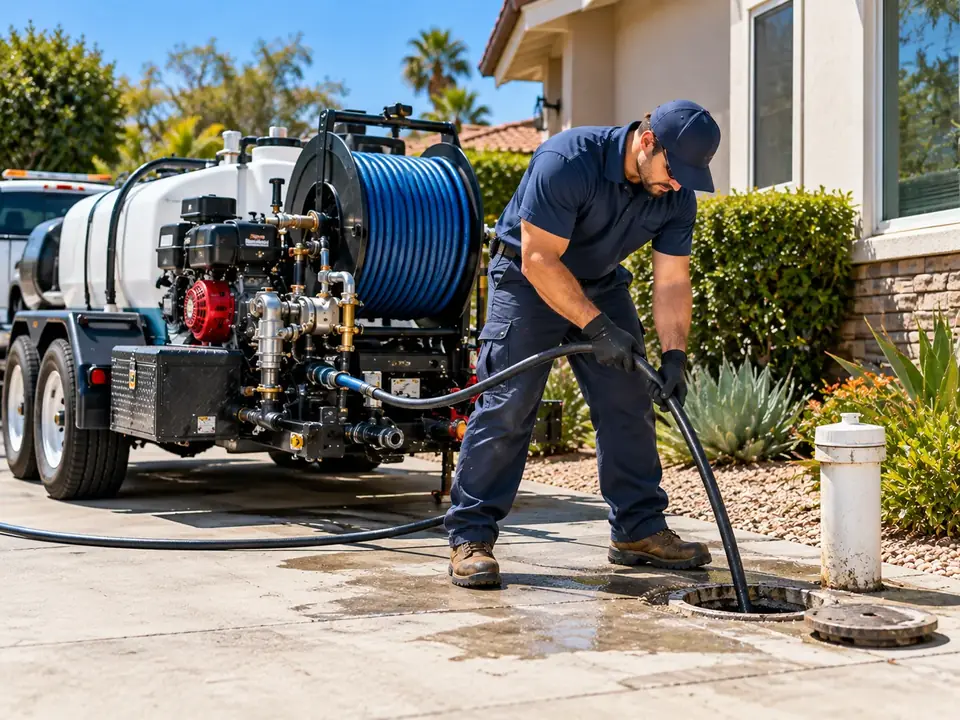
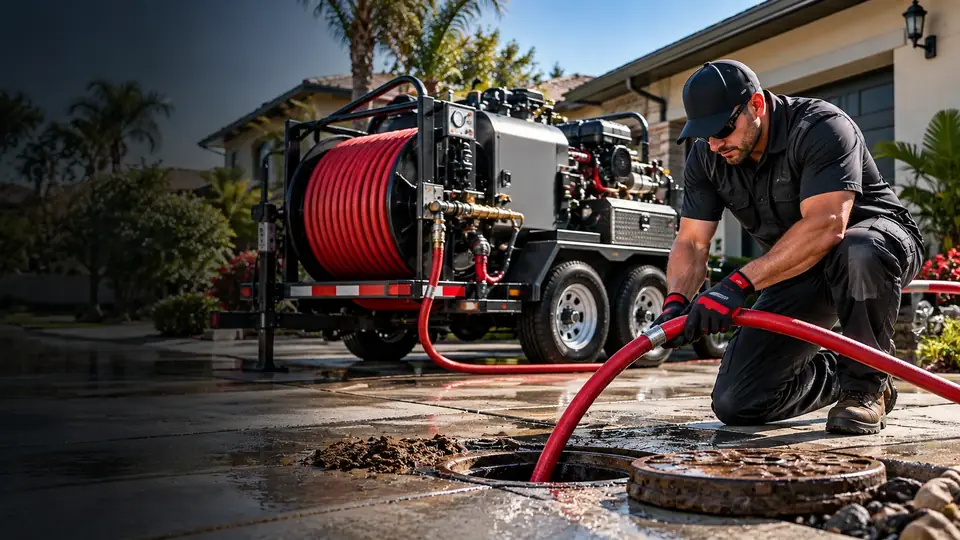
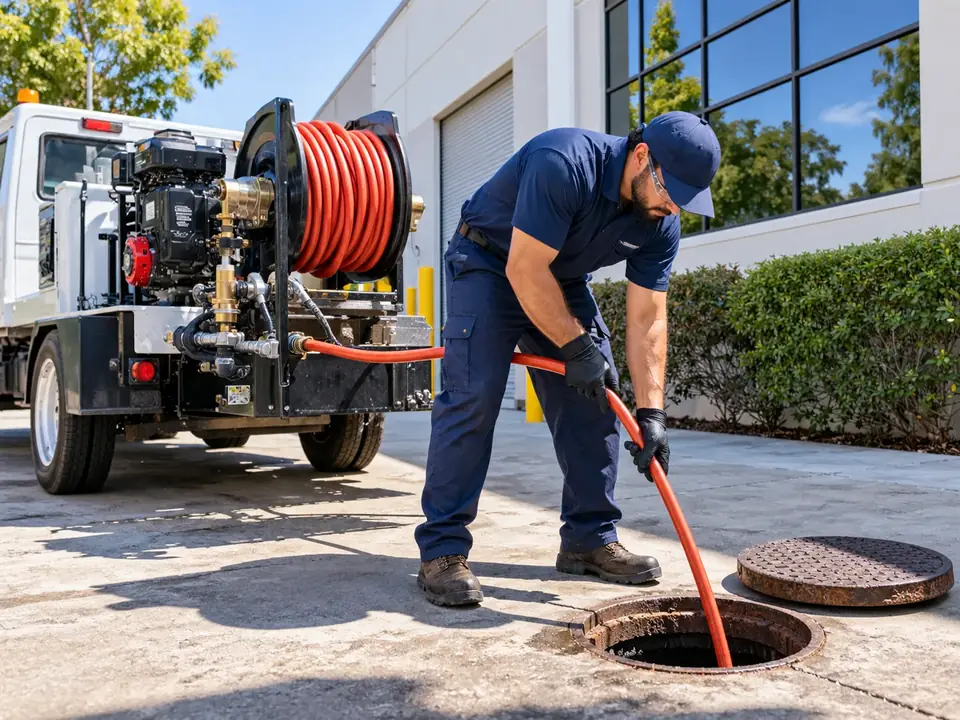
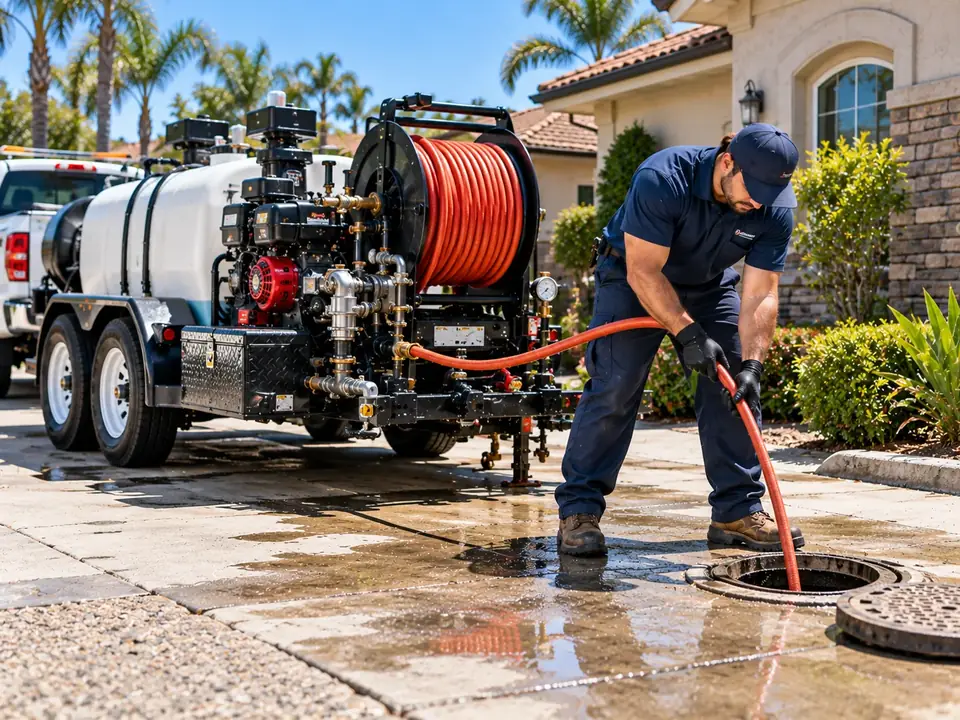
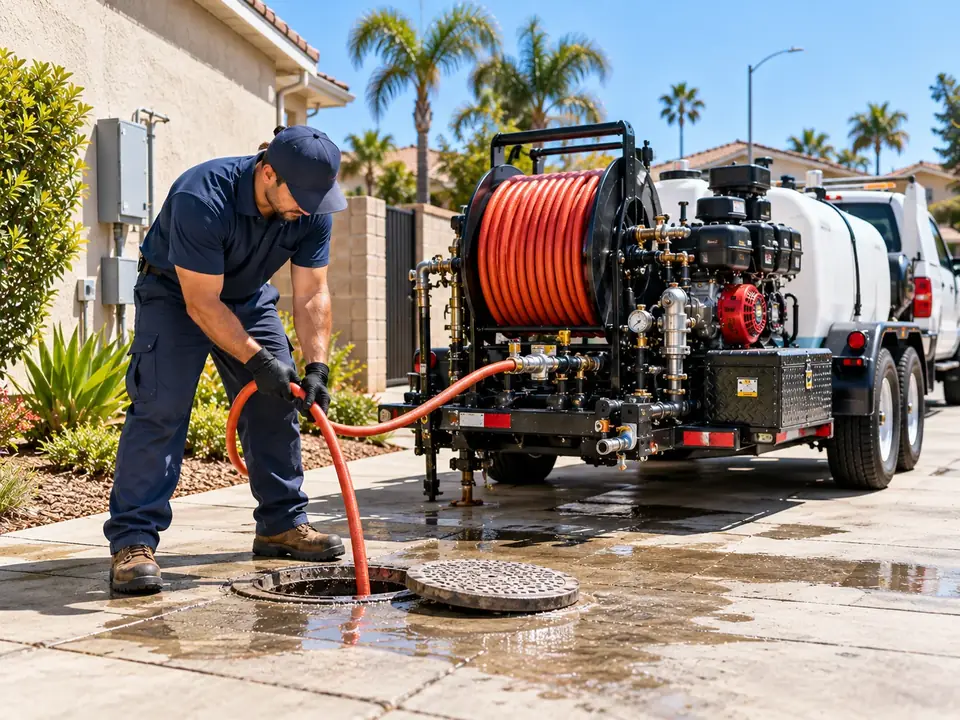
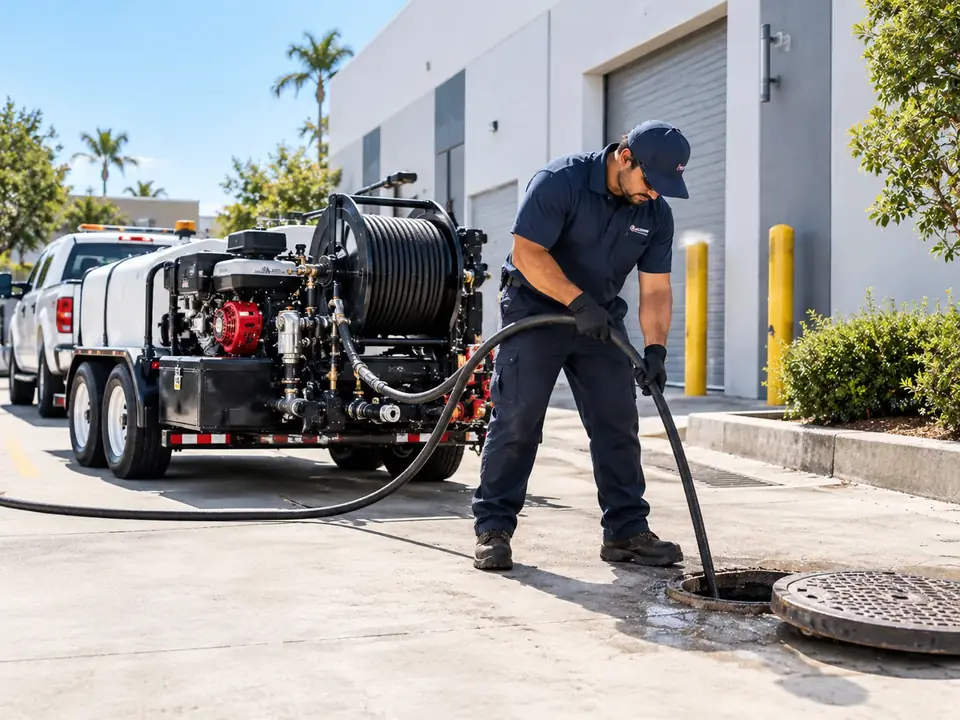
Hydro jetting with a root-cutting nozzle uses high-velocity water — and on some heads, rotating cutting chains — to slice roots back to the inside of the pipe wall and flush the debris away. For very heavy root masses, a mechanical cutter on a cable machine may be used first, followed by jetting to clean the remaining fibers and the grease and paper that collected in them.
After cutting, a sewer camera inspection is the most useful step you can take. It shows how many joints are affected, whether any are separated or offset, and whether the roots have cracked the pipe — which determines whether you’re looking at periodic maintenance or a repair.
Call to schedule root cutting and find out how many joints are affected.
Roots grow back — plan for it
Cutting removes the roots inside the pipe, not the opening they came through. Regrowth is normal, often within one to three years depending on the tree and the season. Your realistic options:
| Option | What it does | Best for |
|---|---|---|
| Scheduled root cutting | Clears regrowth before it causes a backup | A few affected joints, sound pipe |
| Root inhibitor treatment | Slows regrowth at the joints after cleaning (follow product labels and local discharge rules) | Extending the time between cleanings |
| Spot repair or lining | Seals the joints so roots can’t re-enter | Repeated root problems in the same sections |
| Lateral replacement | New pipe with sealed joints | Widespread damage, collapse, or Orangeburg pipe |
Should you remove the tree?
Usually not as a first step. Removing a mature tree is expensive and the roots already in the pipe stay behind. Sealing or replacing the affected pipe section protects the line without losing the shade. If you’re planting new trees, keep thirsty species well away from the sewer path — your cleanout location shows where the line leaves the house.
Read our detailed guide: tree roots in Whittier sewer lines.
What a root cutting visit looks like
- Access: the line is opened at the exterior cleanout (or another access point if there isn’t one).
- Open the line: if roots have fully blocked it, a penetrating nozzle or cutter restores flow first.
- Cut to the wall: a root-cutting nozzle is worked slowly through each affected section, with multiple passes at dense masses.
- Flush: cut root material, paper and grease trapped in the roots are flushed downstream.
- Inspect: a camera pass confirms the roots are cleared and shows which joints they came through.
Serving Whittier neighborhoods
Tree Root Intrusion Cleaning is available throughout Whittier ZIP codes 90601–90606, including Uptown Whittier, East Whittier, South Whittier, West Whittier, Whittwood, Michigan Park, The Quad, Friendly Hills, Valla. Call with your address to confirm scheduling.
Frequently asked questions
How do I know if roots are in my sewer line?
Recurring main-line slowdowns, gurgling toilets, and backups that return every year or two are typical. Root fibers pulled out on a cable are a giveaway; a camera inspection confirms it.
Will jetting kill the roots?
Jetting cuts and removes roots inside the pipe but doesn’t kill the tree or seal the joint. Regrowth is expected unless the entry point is repaired.
Can root removal damage clay pipe?
Clay pipe in fair condition tolerates root cutting well. Cracked, offset or partially collapsed sections can be disturbed, which is why a camera inspection is valuable.
How often should roots be cut?
Many properties need cutting every 12 to 24 months. The right interval depends on how fast regrowth shows up on camera.