The equipment, in plain terms
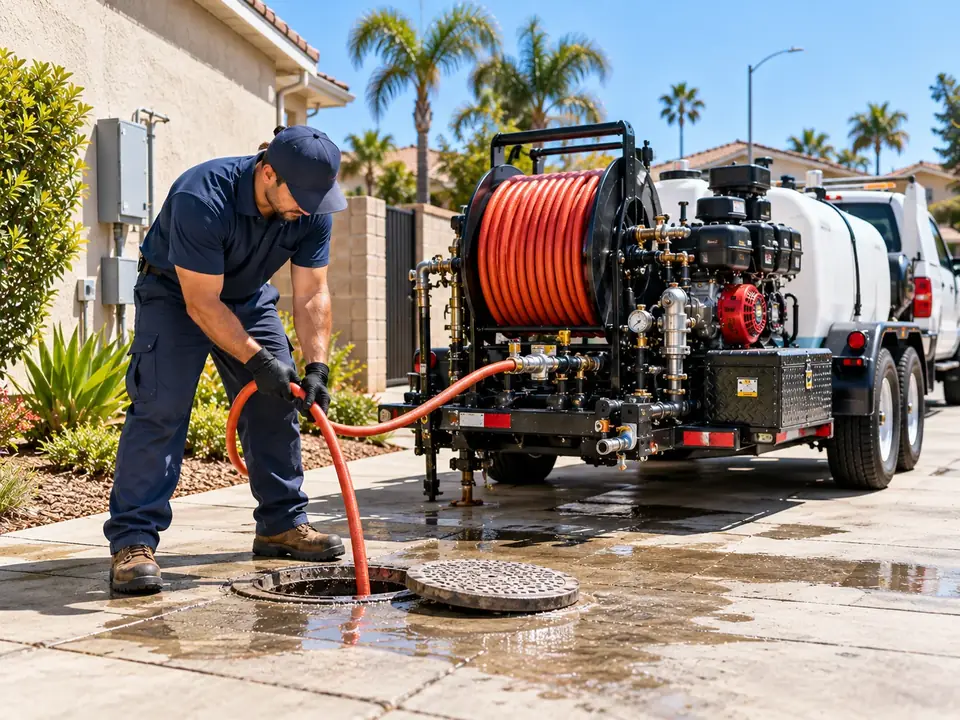
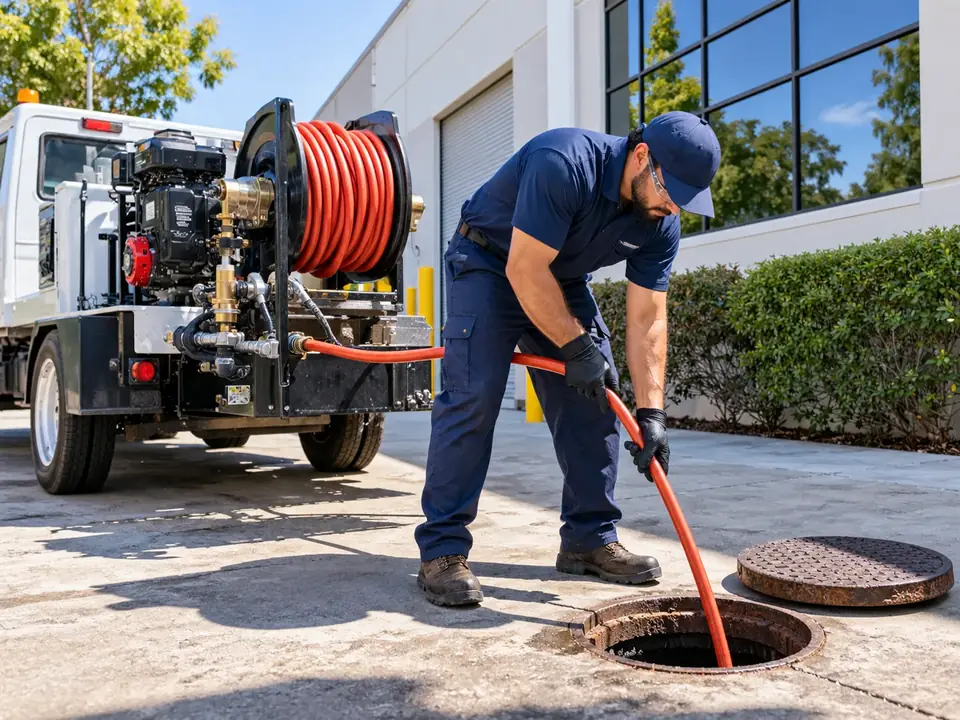
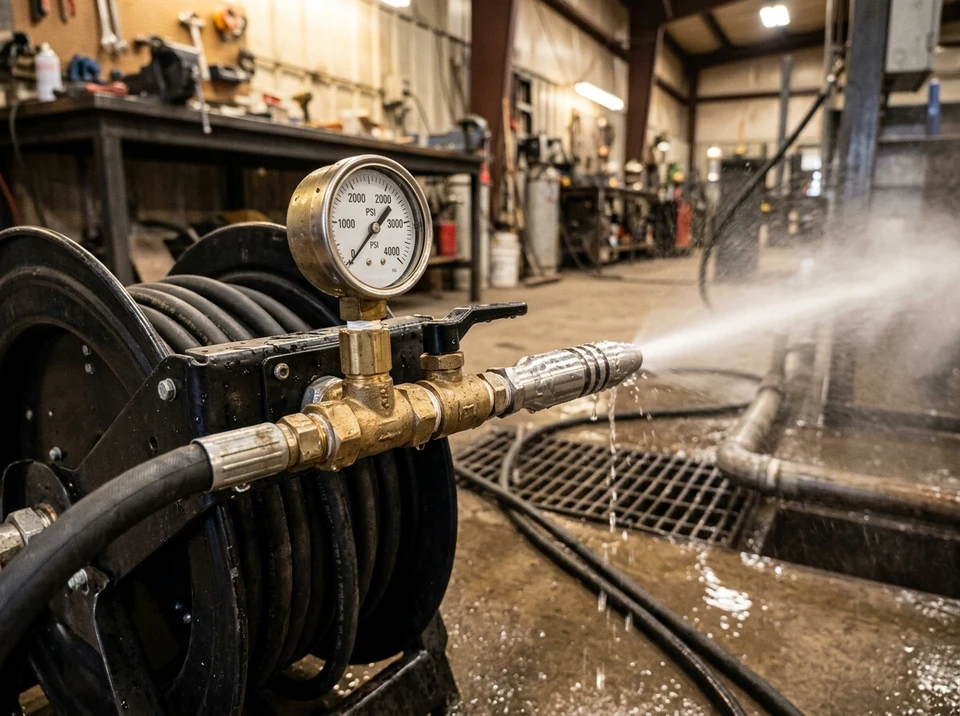
A hydro jetter has four main parts: a water supply (a tank or a hose bib), a high-pressure pump driven by a gas engine or electric motor, a reel of reinforced high-pressure hose, and an interchangeable nozzle on the end. Trailer-mounted units — the kind you’ll see parked in a driveway for a sewer job — carry a large water tank and a long hose for main lines. Smaller portable units are used for interior drains.
Two numbers describe a jetter’s power:
- PSI (pressure) determines how hard the water hits the pipe wall and the blockage. Residential drain and sewer work typically falls between about 1,500 and 4,000 PSI. Industrial jetters run far higher, but that’s not what a house needs.
- GPM (flow) determines how much water moves through the line — and that’s what actually carries debris away. A jetter with high pressure but low flow can loosen buildup without flushing it out. Good jetting is a balance of both.
How the nozzle pulls itself through the pipe
Most jetting nozzles have one or more small forward-facing jets and several rear-facing jets angled back toward the operator. The rear jets do two jobs: they push the nozzle and hose forward into the line, and they scour the pipe wall as they pass. The forward jet breaks up material ahead. As the hose is pulled back slowly, the rear jets wash the loosened material downstream toward the public sewer.
| Nozzle type | What it’s for |
|---|---|
| Penetrating (strong forward jet) | Opening a fully blocked line packed with sludge, paper or wipes |
| Rotating / spinning | Scouring grease and soap coatings from the full circumference |
| Flushing (mostly rear jets) | Moving sand, grit and loosened debris out of long runs |
| Root-cutting | Slicing root masses back to the pipe wall at clay joints |
| Chain flail / descaling | Heavy scale or tough deposits in suitable pipe — used with care |
What a typical jetting visit looks like
- Questions first: which drains are affected, how often it happens, and what’s been done before.
- Access: usually an exterior cleanout near the foundation for the main line, or a cleanout or trap arm for interior drains.
- Condition check: when the pipe’s material or condition is unknown — common in older Whittier homes — a camera inspection comes first.
- Jetting: nozzle, pressure and flow are matched to the pipe size and material; multiple passes may be needed for heavy grease or roots.
- Verification: fixtures are run, and ideally a camera pass confirms the pipe is clean to full diameter.
Describe the symptoms and the age of your home. We’ll tell you honestly whether jetting fits.
What hydro jetting removes
- Grease and the hard, soap-like deposits it forms with minerals in the water
- Sludge, silt and settled organic material
- Paper buildup and many wipes clogs
- Soft scale and soap scum
- Root growth inside the pipe (with a root-cutting nozzle)
What hydro jetting can’t fix
This is where honest providers and upsellers part ways. Jetting is cleaning, not repair. It will not:
- Seal a cracked pipe or a leaking joint
- Lift a sag (“belly”) where water and debris collect
- Realign an offset joint or reconnect separated pipe
- Restore a collapsed section
- Make Orangeburg (fiber) pipe or paper-thin cast iron safe to keep using
In fact, jetting pipe with those problems can make them worse. That’s why a responsible technician asks about the pipe before turning on the pump.
Why it matters more in Whittier
Two local factors make jetting especially relevant here. First, Whittier’s water is hard — the City’s water quality reports have shown average hardness around 290 mg/L as calcium carbonate — and those minerals help grease harden into stubborn deposits. Second, much of the housing stock is old: early-1900s homes around Uptown and 1950s–60s tract homes to the east and south, with clay laterals and cast-iron drains that collect buildup and roots. Both favor a method that cleans the whole pipe wall — paired with an honest check of the pipe’s condition.
How to tell if you might need it
- The same drain clogs again within weeks or months of being snaked
- Several fixtures slow down together
- Toilets gurgle when other fixtures drain
- Roots or grease come back on the snake cable
- A camera inspection shows buildup coating the pipe
Frequently asked questions
How much pressure does hydro jetting use?
Residential drain and sewer jetting typically uses roughly 1,500–4,000 PSI, adjusted for pipe size and material. Smaller interior drains use the lower end.
Is hydro jetting messy?
Main line jetting is usually done from an outdoor cleanout, so the work stays outside. Interior work uses smaller equipment and the access area is protected.
How long do results last?
In a sound pipe with good habits, results can last years. Lines with root intrusion or structural defects typically need repeat service until repaired.
Related services
- Sewer Line Hydro JettingClean the lateral from your house to the street main — roots, grease and sludge removed, not just pushed aside.
- Residential Hydro JettingKitchen, laundry and main sewer lines in Whittier homes cleaned wall-to-wall — with the pipe checked before pressure goes in.
- Drain Line Hydro JettingTargeted cleaning for slow kitchen, laundry, tub and floor drains inside the building — using smaller hoses and controlled pressure.
Call Precision Hydro Jetting. Describe the symptoms and get a straight answer on next steps.
Sources

Precision Hydro Jetting — drain and sewer cleaning for Whittier, CA. This guide is general information, not a diagnosis of a specific plumbing system; conditions vary by property.