Why the cleanout matters
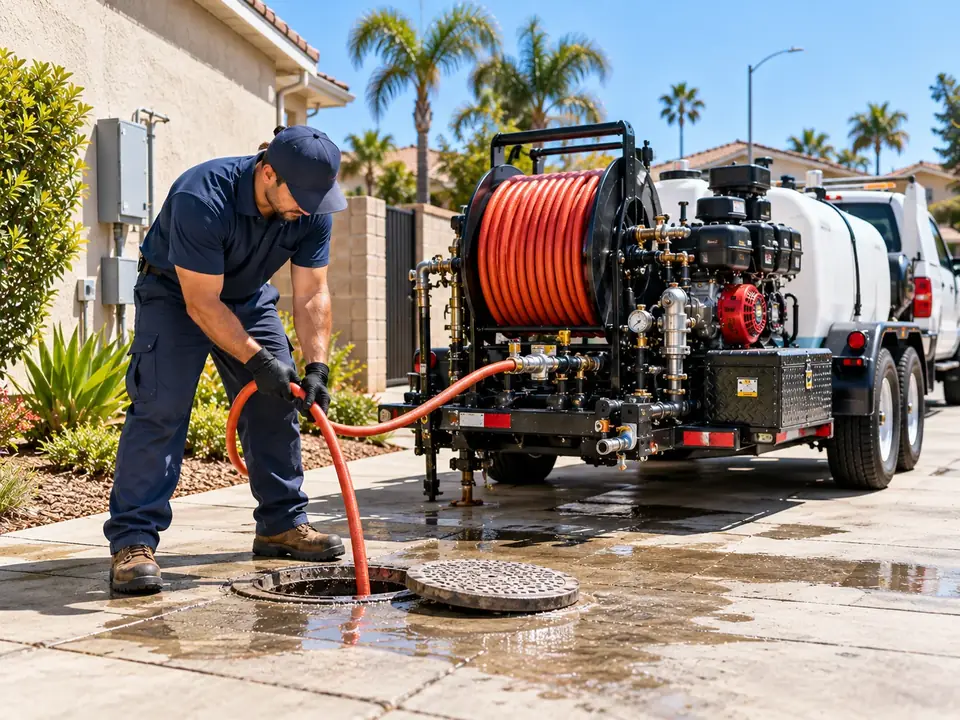
The cleanout is the front door to your sewer line. With it, a technician can run a jetter hose or camera directly into the main without pulling a toilet or climbing onto the roof. It’s also your quickest diagnostic tool during a backup: whether it’s full or empty tells you which side of it the blockage is on. And in the City of Whittier, a cleanout is the starting point for the lateral video required for repair permits — the City’s guidance notes that if there isn’t one, one will need to be installed.
Where to look
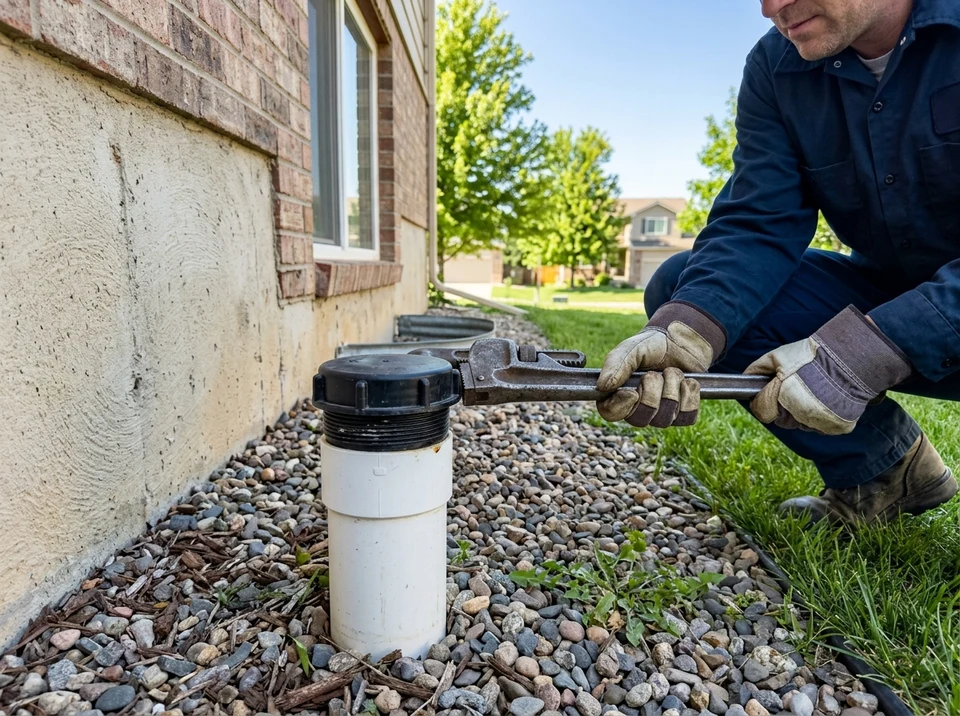
- Outside, near the foundation. Walk the perimeter, especially the side of the house closest to the street and near bathrooms. Look for a 3–4 inch pipe sticking a few inches above the ground with a threaded cap or plug, often square-headed.
- In planters and under landscaping. Cleanouts are frequently buried by mulch, ground cover or a raised bed. Probe gently.
- Near the front property line. Some homes have a second cleanout close to the sidewalk or parkway.
- In the crawlspace of raised-foundation homes, common in older Uptown houses.
- Inside: in a garage, laundry room, under a sink, or behind an access panel near a bathroom.
Hint: your sewer usually leaves the house in the direction of the street and the public main. Bathrooms are typically close to that exit point.
Single vs. two-way cleanouts
| Type | What it looks like | Access |
|---|---|---|
| Single (one-way) | One capped pipe | Usually toward the street only |
| Two-way | Two caps side by side, or a fitting angled both ways | Toward the street and back toward the house |
A two-way cleanout makes it easier to clean and inspect the whole line in both directions.
How to open a cleanout safely
- Stop all water use in the house first.
- Wear gloves and eye protection.
- Stand to the side — if the line is backed up, pressure can push sewage out when the cap loosens.
- Turn the cap slowly with a wrench. Old caps can be seized; don’t crack the fitting forcing it.
- Replace the cap snugly when done. A missing or broken cap lets debris and pests in and sewer gas out.
Call and we’ll help you locate access and explain the options.
What if you don’t have one?
Many homes built before modern codes — and some later homes after remodels — have no accessible exterior cleanout. Service is still possible through a pulled toilet, a roof vent, or an interior access point, but it takes longer and may cost more each time. If your line needs regular maintenance, or you’re planning a lateral repair in the City of Whittier, adding an exterior cleanout is usually a smart investment.
Cleanout care
- Keep it visible and accessible — mark it with a stake if it’s in landscaping.
- Don’t cover it with concrete, decking or pavers.
- Replace cracked or missing caps right away.
- Tell tenants or family where it is.
Frequently asked questions
What does a sewer cleanout look like?
Typically a 3–4 inch pipe a few inches above the ground near the foundation with a threaded cap or square-headed plug.
Is it okay to open the cleanout myself?
Yes, carefully, to check whether it’s full of water. Stop water use first, wear gloves and stand to the side.
Can you jet my line without a cleanout?
Usually, through a toilet flange or roof vent, but it’s slower. Adding a cleanout makes future service easier and is often required for repairs.
Related services
- Sewer Line Hydro JettingClean the lateral from your house to the street main — roots, grease and sludge removed, not just pushed aside.
- Main Sewer Line CleaningSeveral drains backing up at once? Clear the main line fast and find out why it happened — before it happens again.
- Residential Hydro JettingKitchen, laundry and main sewer lines in Whittier homes cleaned wall-to-wall — with the pipe checked before pressure goes in.
Call Precision Hydro Jetting. Describe the symptoms and get a straight answer on next steps.
Sources

Precision Hydro Jetting — drain and sewer cleaning for Whittier, CA. This guide is general information, not a diagnosis of a specific plumbing system; conditions vary by property.