The anatomy of a kitchen clog
Under your sink, water passes through a P-trap, then a horizontal trap arm into the wall, then a branch line that runs — sometimes a long way — to the main building drain. Grease rarely clogs the trap itself. It travels into the wall and branch line, cools, and sticks. Food particles, coffee grounds and starches cling to it. Over months, the opening shrinks from the full pipe diameter to a narrow channel.
In single-story ranch homes common across East Whittier, South Whittier and Whittwood, the kitchen is often at the far end of the house from where the sewer exits, giving grease many feet of pipe to coat.
Why the clog keeps coming back
A snake punches through the plug and water flows again. But the grease lining the pipe stays put — and fresh grease bonds to it easily. Add hard water minerals, which turn grease into a harder, soap-like deposit, and the channel closes again within weeks or months.
Safe steps to try first
- Stop running water and the dishwasher.
- Plunge correctly: on a double sink, seal the other drain with a wet rag or stopper (and clamp the dishwasher hose if you can), then use a flat-bottomed sink plunger with a few inches of water in the basin.
- Clean the trap: place a bucket underneath, unscrew the slip nuts, remove the P-trap and clean it. If the trap is clear, the clog is farther down.
- Check the disposal: if one side won’t drain, the disposal may be jammed — turn off power and use the hex key on the bottom.
What not to do
- Don’t pour chemical drain openers into a standing sink. They often don’t work on grease, can damage older pipes, and create a splash hazard for you and anyone who works on the drain next.
- Don’t pour boiling water into a sink with PVC pipe — it can soften joints. And it only moves grease farther down.
- Don’t keep running the disposal on a clogged line; it just adds more material.
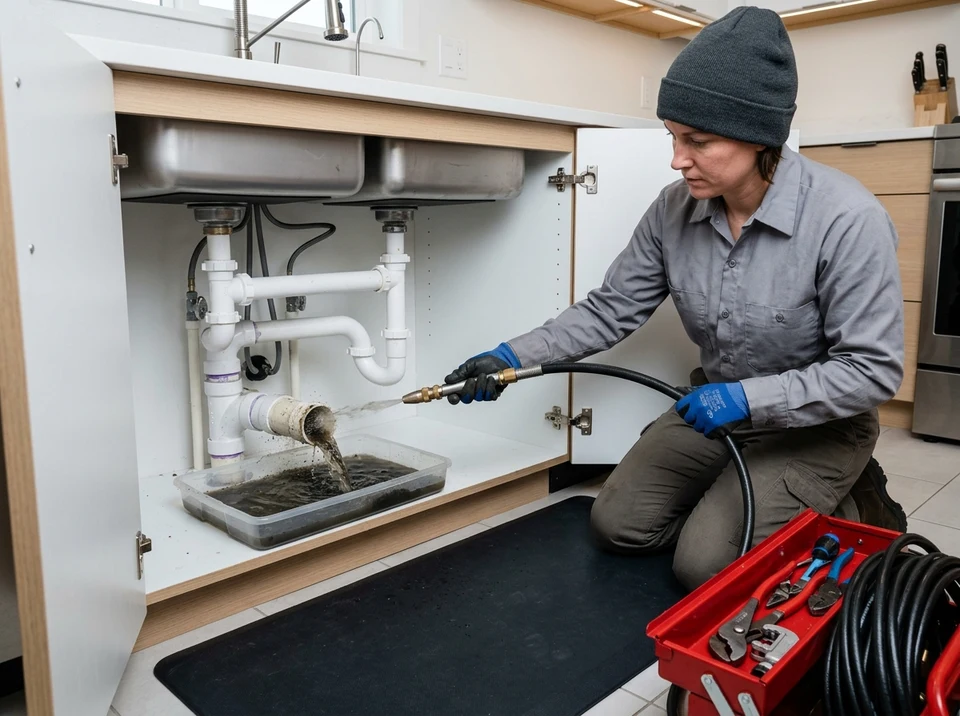
The grease is in the branch line. Call to ask about drain line jetting.
When to call for hydro jetting
- The sink has clogged more than once in a year.
- Water backs up into the other basin when the dishwasher drains.
- Gurgling or sour smells from the drain.
- A previous snaking only lasted weeks.
Drain line jetting uses a smaller hose and controlled pressure suited to 1½–2 inch kitchen lines, scouring off the grease coating rather than poking through it.
Holiday and party season
Thanksgiving through New Year’s is peak season for kitchen and main-line clogs: more cooking, more grease, more guests, more dishes. Before a big gathering, make a plan for grease (a can by the stove), scrape plates into the trash, and run full loads rather than many partial ones.
Daily habits that keep it clear
- Pour cooled grease into a can or jar and trash it.
- Wipe greasy pans and plates with a paper towel before washing.
- Keep a strainer in the non-disposal basin.
- Skip coffee grounds, eggshells, rice and pasta in the disposal.
- Run cold water while the disposal is on and for several seconds after.
Frequently asked questions
Why does my kitchen sink clog but other drains are fine?
The clog is in the kitchen branch line, where grease accumulates. If other drains are slow too, the main may be involved.
Does a garbage disposal cause clogs?
It can contribute when used for the wrong foods. Starchy and fibrous foods and coffee grounds combine with grease into dense plugs.
Is it safe to jet a kitchen drain inside the house?
Yes, with the right equipment. Interior drain jetting uses a smaller hose and lower pressure, and the work area is protected.
Related services
- Drain Line Hydro JettingTargeted cleaning for slow kitchen, laundry, tub and floor drains inside the building — using smaller hoses and controlled pressure.
- Grease & Sludge RemovalHardened grease and sludge scoured off the pipe wall — the kind of buildup a snake leaves behind.
- Recurring Drain Clog RepairSame drain, same clog, every few months? We find the cause behind the pattern and fix that — not just the symptom.
Call Precision Hydro Jetting. Describe the symptoms and get a straight answer on next steps.
Sources

Precision Hydro Jetting — drain and sewer cleaning for Whittier, CA. This guide is general information, not a diagnosis of a specific plumbing system; conditions vary by property.